The Benefits of Minimalism for Mental Health

The benefits of minimalism for mental health

In a world full of noise, rush, and excess, our minds are constantly overstimulated. From overflowing inboxes to cluttered living spaces, it’s no wonder stress and anxiety are at an all-time high.

Minimalism offers more than just a clean space — it offers a clearer mind. By simplifying our surroundings and routines, we create room for calm, focus, and emotional well-being.

Here’s how embracing minimalism can have a powerful, positive effect on your mental health.

Clutter Creates Mental Chaos

Let’s start with a basic truth: your environment affects your mind. Studies have shown that visual clutter can:

  • Increase cortisol (the stress hormone)
  • Reduce focus and productivity
  • Trigger feelings of guilt, anxiety, and overwhelm

A cluttered home often leads to a cluttered mind. Every object you see requires mental processing — even if it’s unconscious. The more stuff in your space, the more distracted and mentally tired you feel.

Minimalism Reduces Decision Fatigue

Ever felt exhausted by the number of small decisions you make each day?

  • What to wear
  • What to eat
  • What to do next
  • Where to put your keys

This is called decision fatigue, and it’s real. The more choices you face, the harder each one becomes.

Minimalism helps by narrowing the options:

  • A simplified wardrobe means quicker, stress-free mornings
  • A minimal kitchen setup makes meal prep faster
  • Organized spaces help you find what you need instantly

Fewer choices = less stress.

Clear Spaces Create Mental Clarity

Walking into a room with clean surfaces, open space, and intentional objects does something powerful: it makes you feel at ease.

Your brain doesn’t have to work overtime. You’re not being pulled in a hundred directions by “stuff.”

This physical simplicity often leads to:

  • Improved concentration
  • Better sleep
  • More mindful thinking
  • Increased creativity

It’s like giving your brain room to breathe.

Letting Go Builds Emotional Resilience

Decluttering is an emotional process. You might feel guilt, attachment, or fear when letting go of certain items. But the act of releasing them can be deeply healing.

You learn to:

  • Detach from the past
  • Let go of “what if” thinking
  • Focus on the present and future
  • Build confidence in your decision-making

Minimalism teaches you that your identity and worth aren’t tied to your belongings. That’s a powerful mindset shift.

Minimalism Encourages Presence

When you’re not constantly managing, cleaning, or organizing “stuff,” you gain time and mental space to simply be.

  • Be with your loved ones
  • Be present with your thoughts
  • Esteja envolvido no que você está fazendo
  • Be intentional with how you spend your time

Presence is one of the most healing gifts you can give yourself — and minimalism creates the space for it.

Simplicity Brings Freedom from Consumer Pressure

We live in a culture that constantly tells us we need more:

  • More clothes
  • More gadgets
  • More décor
  • More experiences

This never-ending chase creates anxiety, comparison, and dissatisfaction.

Minimalism breaks the cycle. It helps you:

  • Focus on what you already have
  • Spend more intentionally
  • Stop comparing your life to others
  • Feel more content with less

That shift can drastically reduce financial stress and the fear of missing out (FOMO).

Routine Simplification Helps Anxiety

Minimalist living extends beyond your physical space — it also affects how you structure your time.

  • Menos compromissos = menos estressores
  • Streamlined routines = more predictability
  • Fewer distractions = better focus on self-care

When you remove the unnecessary from your day, you create space for what actually restores you — rest, connection, creativity, and mindfulness.

Minimalism Creates Emotional Safety in Your Space

Your home should feel like a safe retreat, not a source of stress. Minimalism helps you create a space where:

  • Everything has a purpose
  • Há menos para limpar, gerenciar e consertar
  • You feel calm and in control

This kind of environment supports better mental health — especially if you deal with anxiety, depression, or overwhelm.

Less Stuff = More Energy

Mental health isn’t just about how we feel — it’s also about how much energy we have to engage with life.

Uma vida desordenada drena energia. Um simplificado o restaura.

When you have:

  • Fewer distractions
  • Clearer priorities
  • Less to clean, fix, and worry about

…you naturally have more energy to invest in the things and people you love.

Final Thoughts: Minimalism Is a Form of Self-Care

At the end of the day, minimalism is not about restriction. It’s about freedom.

Freedom from chaos.
Freedom from stress.
Freedom from unrealistic expectations.

Minimalism is one of the most compassionate things you can do for your mind. It’s a way to protect your peace, honor your limits, and focus on what truly matters.

And when your mind feels clear and supported, everything else becomes a little easier.
Easy Tips to Let Go of Stuff

Organize without Overloading: Easy Tips for Letting Go of Stuff

Let’s be honest — getting rid of things can feel hard. Whether it’s emotional attachment, fear of needing it “someday,” or simply not knowing where to start, decluttering often leads to overwhelm before progress.

But here’s the good news: you don’t have to do it all at once, and you don’t have to feel stressed while doing it. In this guide, you’ll learn how to declutter gently, gradually, and effectively — all without the overwhelm.

Why Decluttering Feels So Overwhelming

Before we jump into the tips, it helps to understand why decluttering is so tough:

  • Emotional attachment — Items can carry memories or represent a part of our identity.
  • Decision fatigue — It’s exhausting to make hundreds of “keep or toss” decisions in one go.
  • Perfectionism — We feel we have to do it “right” or not at all.
  • Sheer volume — Too much stuff + too little time = instant burnout.

But decluttering doesn’t have to be dramatic. It can be kind, mindful, and even fun — if you have the right approach.

Tip 1: Start Super Small

Forget whole-house overhauls. Begin with one of the following:

  • One drawer
  • Your purse or bag
  • A single kitchen cabinet
  • Your car’s glove box
  • Just your socks

Completing a tiny space builds confidence and momentum. Small wins = big motivation.

Tip 2: Set a Timer (and Stop When It Rings)

Give yourself just 10–15 minutes. You don’t need a full weekend.
Set a timer and declutter as much as you can within that time.

Why it works:

  • It adds urgency (you’ll move faster).
  • It feels manageable.
  • It removes guilt for not finishing everything.

You can always do another round tomorrow.

Tip 3: Use the “One-Year Rule”

Ask this powerful question:
“Have I used this in the last year?”
If the answer is no, it’s a strong sign you can let it go.

This rule works especially well for:

  • Clothes
  • Kitchen gadgets
  • Decorations
  • Electronics
  • Tools

You might be surprised how many things fall into the “never used” category.

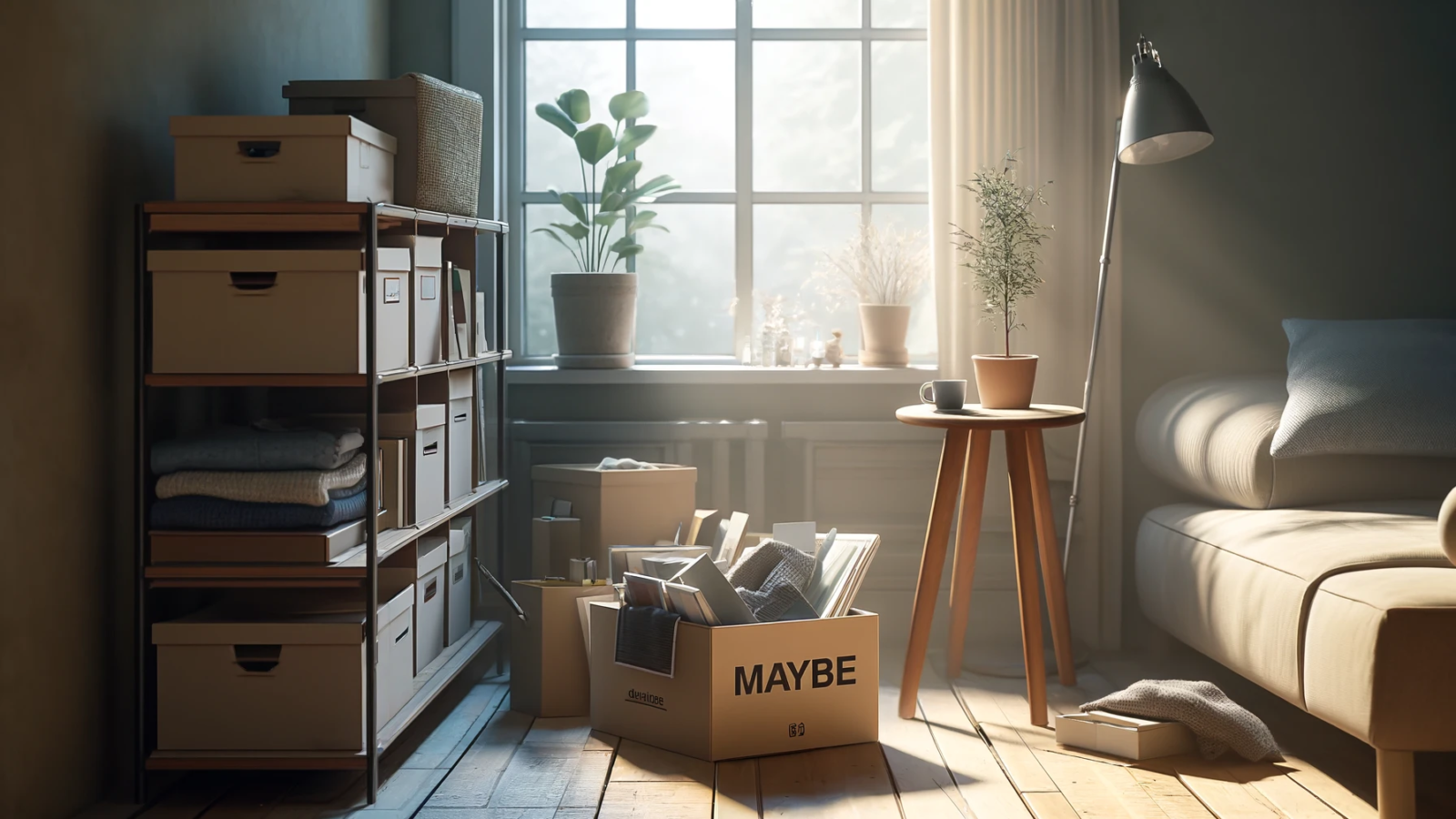
Tip 4: Create a “Maybe” Box

Not sure if you’re ready to let go? That’s okay.
Put the item in a “maybe” box and mark it with today’s date.

Revisit it in 30–60 days. If you haven’t needed anything inside, it’s probably safe to let go.

This method takes pressure off the moment and helps you make better decisions over time.

Tip 5: Don’t Wait for the “Perfect” Place to Donate

Many people hold onto stuff because they want to donate it to the “right” person, place, or cause.

But while you wait, clutter continues to take up space and mental energy.

Bom o suficiente é bom o suficiente.
Deixe suas doações no brechó ou caixa de caridade mais próximo. Soltar. Adiantar.

Tip 6: Declutter by Type, Not by Location

Decluttering by type (instead of room) helps you make better comparisons and decisions.

Try it with:

  • All books
  • All towels
  • All pens and office supplies
  • All bags or backpacks
  • All phone chargers and cables

You’ll see duplicates and unnecessary items more clearly this way.

Tip 7: Turn on Music or a Podcast

Make decluttering a pleasant experience. Play music, an inspiring podcast, or even a TV show in the background.

This turns a dreaded task into something enjoyable — like a mini self-care ritual.

Tip 8: Use the “Would I Buy This Again?” Trick

Pick up an item and ask:
“If I didn’t already own this, would I buy it again today?”

This simple shift in perspective often reveals the truth about what we really value.

Tip 9: Take “Before and After” Photos

Visual progress is powerful. Take a quick photo of a space before you start. Then snap one after you’ve decluttered.

Seeing the transformation:

  • Reinforces your success
  • Motivates you to keep going
  • Helps you appreciate the results

It’s also just really satisfying.

Tip 10: Be Kind to Yourself

Decluttering can stir up emotions, memories, and doubts. If you feel stuck, take a breath. Remind yourself:

  • You are not your stuff.
  • Progress is better than perfection.
  • Letting go creates room for peace.

Go at your pace. There’s no rush.

Bonus Tip: Celebrate What You Keep

Minimalism isn’t only about what you let go of — it’s also about what you choose to keep.

Honor the items that truly matter:

  • Display your favorite photos
  • Keep clothes that make you feel good
  • Use things you’ve been “saving” for special occasions

Let what remains reflect the life you want to live.

Your Journey, Your Way

Decluttering isn’t about rules — it’s about freedom.
Freedom from stress.
Freedom from overwhelm.
Freedom from guilt and “what ifs.”

You don’t have to declutter your whole life today. Just start somewhere — anywhere. One step at a time. And with every item you release, you’ll feel a little lighter, a little clearer, and a lot more in control.

How to Own Less and Live Better

Practical Minimalism: How to Own Less and Live Better

Minimalism isn’t about living with nothing. It’s about living with what truly matters. Practical minimalism takes the core ideas of the lifestyle and turns them into real, doable actions — no extremes, just real change.

Whether you’re curious about simplifying or already started decluttering, this guide will help you embrace practical minimalism in your daily life so you can live better with less.

What Is Practical Minimalism?

At its heart, practical minimalism means simplifying your life in a way that works for you. It’s not about throwing everything away or living in a tiny house with three shirts.

It’s about:

  • Choosing quality over quantity
  • Letting go of things that don’t serve you
  • Being intentional about your space, time, and energy

Practical minimalism fits into your real life — even if you have a family, a job, or a busy schedule.

Why Practical Minimalism Works

Let’s face it: life is noisy, cluttered, and fast-paced. Most of us don’t need more things — we need more space, mentally and physically.

Here’s what practical minimalism can help you achieve:

  • More time — Less stuff = less cleaning, shopping, and decision-making
  • Less stress — A calm space leads to a calm mind
  • Better focus — You can concentrate on what matters
  • More money — Buying less means saving more
  • Greater joy — You’ll enjoy what you keep even more

Step 1: Declutter by Category, Not by Room

One of the most practical ways to start is to declutter by category, not by space. For example:

  • Clothes
  • Books
  • Kitchenware
  • Electronics
  • Decorations
  • Paperwork

This keeps you focused and prevents you from bouncing around aimlessly.

Tip: Start with something easy, like your socks or accessories. Small wins build momentum.

Step 2: Apply the “One-Year Rule”

Ask yourself:
Have I used this in the last year? Will I use it in the next year?

If not, it might be time to let it go. This simple rule helps you be honest with yourself without overthinking every item.

Step 3: Create Zones of Simplicity

Not ready to simplify your whole life? No problem. Create zones where minimalism rules apply.

Examples:

  • Your desk
  • Your nightstand
  • Your closet
  • Your bathroom counter

Keeping even just one area tidy and intentional can have a huge mental impact.

Step 4: Be Mindful About What Comes In

Minimalism isn’t just about what you remove — it’s about what you don’t bring in.

Before buying or accepting anything, ask:

  • Do I need this?
  • Do I already have something similar?
  • Will I still want this in a month?

Impulse buys are one of the biggest enemies of minimalism.

Step 5: Opt for Multi-Use and Quality Items

One great minimalist trick is to invest in fewer, better things. Choose items that serve multiple purposes and are built to last.

For example:

  • A cast iron pan instead of five non-stick ones
  • A neutral coat that goes with anything
  • A quality notebook over stacks of random notepads

These items reduce clutter and increase satisfaction.

Step 6: Apply Minimalism to Your Calendar

Your time is just as valuable as your space. Don’t overcommit.

  • Limit unnecessary meetings
  • Block time for rest and creativity
  • Say “no” to things that don’t align with your priorities
  • Schedule buffer time between tasks

Empty space in your calendar is not laziness — it’s peace.

Step 7: Go Digital with Intention

Digital clutter can be just as overwhelming as physical clutter. Here’s how to simplify:

  • Organize your files and photos
  • Unsubscribe from emails you don’t read
  • Delete unused apps
  • Set boundaries with screen time
  • Use minimalist wallpapers and quiet phone settings

Your digital life deserves simplicity, too.

Step 8: Make It Family-Friendly

Yes — minimalism works with kids, roommates, or partners. The secret is to lead by example, not force change.

  • Create shared zones of calm
  • Involve others in decluttering sessions
  • Focus on experiences instead of gifts
  • Be patient — everyone has their own pace

Minimalism is more contagious than you think.

Step 9: Celebrate What You Keep

Minimalism doesn’t mean empty or boring. It means choosing what brings value.

Display items you truly love. Make space feel inviting and personal. Appreciate the quiet beauty of fewer things — a framed photo, a handmade mug, a plant.

Intentionality turns ordinary things into treasures.

Step 10: Keep It Flexible

Life changes. Minimalism is not a strict set of rules — it’s a mindset.

Some seasons you’ll need more, others less. Adjust as needed. What matters is staying in tune with your values and comfort.

There’s no perfect minimalist — only a better version of you.

A Simpler Life, One Step at a Time

Practical minimalism is about freedom — freedom from clutter, from stress, and from overwhelm. You don’t need to become a minimalist overnight. You just need to begin.

Start small. Go gently. And with each item, task, or commitment you let go of, you’ll find yourself closer to what really matters.

You don’t need more — you need less of what doesn’t serve you.

Minimalist Life A Beginners Guide

How to Start a Minimalist Life: A Beginner’s Guide

Living a minimalist life is not about deprivation — it’s about intention. In a world full of distractions, chaos, and consumerism, minimalism offers clarity and focus. If you’re feeling overwhelmed by clutter, decisions, or the constant rush, it might be time to simplify.

Let’s explore how you can begin a minimalist lifestyle step by step, even if you’ve never thought of yourself as someone who could live with less.

What Is Minimalism, Really?

Minimalism isn’t just about owning fewer things — it’s about making room for what truly matters. That could mean decluttering your closet, simplifying your schedule, or cutting down on digital distractions. It’s about removing excess so you can focus on peace, purpose, and people.

You define what minimalism looks like in your life. For some, it’s a clean apartment with only the essentials. For others, it’s a commitment to living with intention and reducing stress.

Benefits of Living Minimally

Before diving into the how-to, let’s talk about why this lifestyle is worth considering:

  • Less stress and anxiety – Fewer possessions and commitments = fewer things to worry about.
  • More time and energy – Spend less time cleaning, shopping, and organizing.
  • Improved focus and clarity – A minimalist space can help you think more clearly.
  • Better financial health – You’ll naturally spend less when you stop buying things you don’t need.
  • Freedom – Letting go of “stuff” often leads to emotional freedom and flexibility.

Step 1: Define Your “Why”

Start by asking yourself:
Why do I want to simplify?

Your reason might be to have a calmer home, more savings, better mental health, or more time for your family. This “why” will guide your journey and help keep you motivated when it gets tough.

Step 2: Start with One Area

It’s tempting to overhaul your entire life overnight, but that’s overwhelming. Start small.

Choose one area of your life or home to declutter or simplify. Common beginner spots include:

  • A single drawer
  • Your closet
  • Your bathroom shelf
  • Your phone (apps, photos, emails)

Pick one. Focus only on that.

Step 3: The 4-Box Method

When decluttering physical items, use the 4-box method:

  1. Keep – Items you love and use regularly.
  2. Donate – Items in good condition you no longer need.
  3. Trash – Broken or unusable items.
  4. Maybe – Unsure? Put them in a box with a date. If you don’t use them in 30 days, let them go.

This method gives structure to your process and keeps you from feeling paralyzed by decisions.

Step 4: Set Rules That Fit Your Life

There’s no one-size-fits-all minimalist lifestyle. Create simple rules that work for you:

  • One in, one out (if you buy something new, donate something old)
  • Capsule wardrobe (a limited number of mix-and-match pieces)
  • No-buy challenge (avoid shopping for a certain period)
  • Declutter 5 things daily

Make your own version of minimalism. It should support your values and goals.

Step 5: Practice Mindful Consumption

Minimalism isn’t just about getting rid of things — it’s about avoiding unnecessary accumulation.

Start asking yourself:

  • Do I really need this?
  • Does this add value to my life?
  • Is this worth the space, time, and money?

Being intentional about what comes into your life is just as important as what you remove.

Step 6: Go Digital Minimalist

Physical clutter often mirrors digital clutter. Try simplifying your digital life:

  • Unsubscribe from emails you never read
  • Delete apps you don’t use
  • Organize your desktop
  • Limit screen time
  • Turn off non-essential notifications

A tidy digital space helps clear your mental space too.

Step 7: Create a Minimalist Routine

Minimalism extends beyond physical space. Your time is also valuable.

  • Prioritize rest and self-care
  • Plan your day with fewer, more meaningful tasks
  • Learn to say “no” to commitments that don’t align with your goals
  • Build routines that support simplicity (like prepping meals or clothes the night before)

A minimalist routine leads to calmer mornings and smoother days.

Step 8: Declutter Your Relationships

This one’s tough but powerful. Evaluate your relationships with the same honesty as your belongings.

  • Who uplifts you?
  • Who drains your energy?
  • Are your boundaries respected?

Minimalism includes letting go of toxic dynamics and focusing on authentic, nourishing connections.

Step 9: Let Go of Guilt and Perfection

You don’t need to live in an all-white, Pinterest-perfect home to be a minimalist. Let go of the pressure to do it “right.”

There’s no perfect way to simplify. It’s not about being extreme. It’s about being intentional. Some days you’ll feel in control. Other days will feel messy. That’s okay. Minimalism is a practice, not a destination.

Step 10: Keep Evolving

Minimalism isn’t something you achieve once and never touch again. As your life changes, your version of minimalism will change too. Regularly revisit your “why,” adjust your goals, and keep learning.

Remember: minimalism is a tool to help you live better — not a rigid set of rules.

Final Thoughts: Make Space for What Matters Most

At its core, minimalism is about freedom. The freedom to own your time, focus on what truly matters, and breathe deeper in a clutter-free space.

Start small. Be kind to yourself. Celebrate each step.

You don’t have to live with nothing — just with what counts.

10 Steps to Simplify Your Daily Routine with Minimalism

10 Steps to Simplify Your Daily Routine with Minimalism

Life moves fast, and it’s easy to get caught in a whirlwind of tasks, distractions, and obligations. But what if your day could feel lighter, more focused, and more intentional?

Minimalism isn’t just about decluttering your home — it’s also about simplifying your routine to create space for what matters most. Here’s how you can start building a daily routine that aligns with a minimalist lifestyle.

1. Start with a Clear Morning Ritual

Mornings set the tone for the rest of your day. A minimalist morning doesn’t mean rushing or checking your phone right away — it means creating a calm and purposeful start.

Try this:

  • Wake up 15–30 minutes earlier
  • Make your bed
  • Enjoy a quiet coffee or tea
  • Do a short stretch or breathing exercise
  • Set your top 1–3 intentions for the day

A consistent, simple morning ritual helps reduce decision fatigue and brings clarity.

2. Limit Your Daily To-Do List

Long to-do lists are overwhelming and often unrealistic. Minimalism encourages you to focus on the essential — not the endless.

The trick: Choose just 3 main tasks per day. Ask yourself:
“If I only do these three things today, will it be a good day?”

You’ll be surprised how much more productive and fulfilled you feel by focusing on less.

3. Create Time Blocks Instead of Multitasking

Multitasking often leads to stress and mistakes. A better approach is time blocking — assigning specific time slots for specific types of tasks.

For example:

  • 9:00–10:30 AM: Deep work (writing, strategy, creative tasks)
  • 11:00–11:30 AM: Emails
  • 2:00–2:30 PM: Admin or errands

You’ll waste less time switching gears and feel more in control of your day.

4. Say “No” More Often

A cluttered routine usually comes from saying “yes” too often — yes to extra meetings, projects, favors, and distractions.

Minimalism is about intentional living. Say “no” to things that don’t align with your goals or add real value to your life. That includes social events, unnecessary shopping trips, or even checking social media constantly.

Every “no” creates room for a more meaningful “yes.”

5. Simplify Your Meals

Meal planning can be a huge time and energy drain. A minimalist approach can save you hours each week.

Here’s how:

  • Choose 2–3 go-to breakfast options
  • Rotate simple lunches and dinners (create a weekly menu)
  • Keep your grocery list short and focused
  • Prep ingredients in batches when possible

Eating well doesn’t have to be complicated.

6. Declutter Your Daily Spaces

The spaces you use most — your desk, kitchen, or bathroom counter — can impact how you feel throughout the day.

Take a few minutes in the morning or evening to do a mini reset:

  • Clear surfaces
  • Put things back in place
  • Toss out trash or unused items
  • Light a candle or open a window for fresh air

You’ll think more clearly and feel less anxious with a tidy space.

7. Automate and Streamline Small Tasks

Look for small tasks that you repeat daily and see if you can automate or simplify them.

Examples:

  • Use automatic bill pay
  • Set up reminders instead of mentally tracking things
  • Use a digital calendar to manage appointments
  • Keep essentials in one place (keys, wallet, charger)

These little changes add up to big time and mental space savings.

8. Build in Mindful Breaks

Your day doesn’t have to be go-go-go. In fact, stepping back often leads to better results.

Try these minimalist-style breaks:

  • 5 minutes of deep breathing
  • A short walk around the block
  • Listening to calming music
  • A screen-free coffee break

Create space to breathe — literally and mentally.

9. Limit Screen Time (Especially Social Media)

Scrolling endlessly can take up hours of your day without adding value. A minimalist routine includes digital boundaries.

Tips:

  • Turn off notifications
  • Set specific times to check emails or social media
  • Use apps like Focus Mode or Screen Time
  • Keep your phone out of reach during focused work

Less screen time = more presence and peace.

10. Reflect and Adjust Regularly

Minimalism isn’t static — your routine should evolve with your needs. At the end of the day or week, ask yourself:

  • What worked well today?
  • What felt unnecessary?
  • What do I want more or less of?

Make small adjustments and improvements. Minimalism is a journey — not a rigid rulebook.

Living a Lighter, More Purposeful Day

When you simplify your routine, you’re not doing less — you’re doing what matters most.

You’ll feel calmer, more present, and more energized for the things and people that matter. Don’t aim for perfection. Start with one small change, and build from there.

The beauty of a minimalist daily routine is that it’s custom-fit for you.